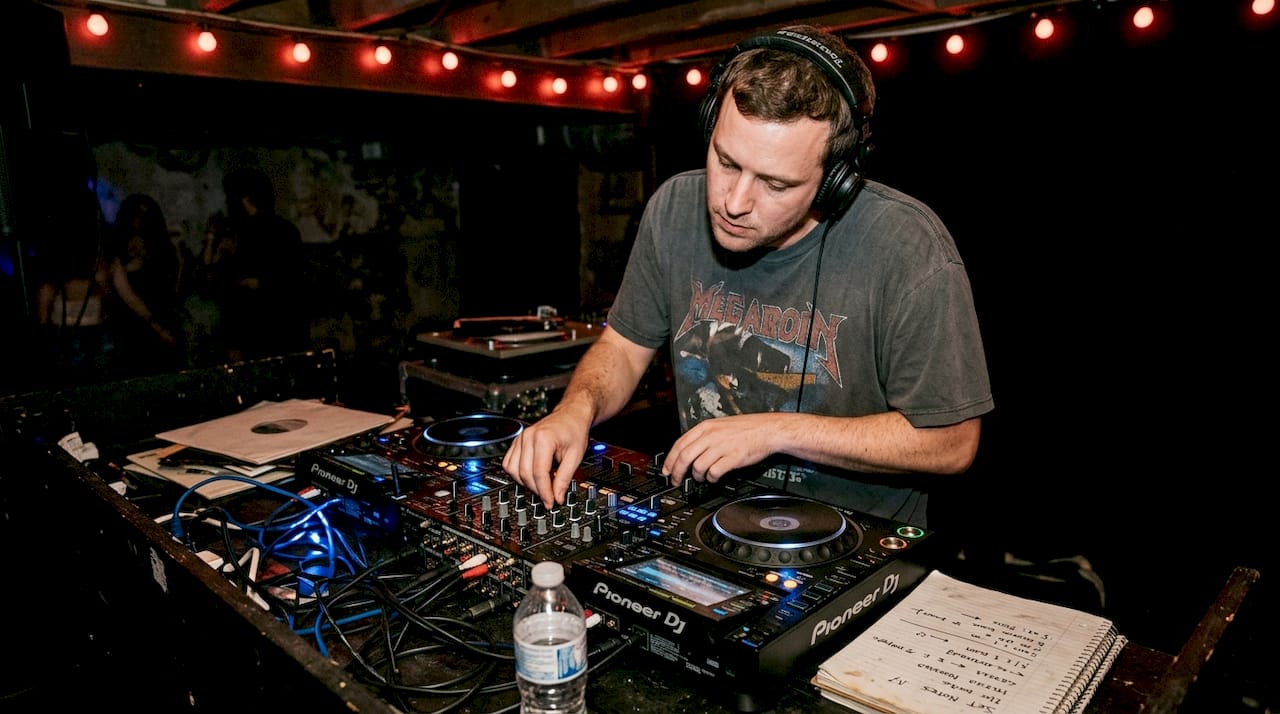
Many people assume a DJ set is just someone pressing play on a playlist. That idea couldn't be further from the truth, especially in San Francisco's underground bass music scene. Here, a DJ set is a living, breathing ritual shaped by technique, crowd energy, deep crate knowledge, and genuine community values. Bass music scenes like drum and bass emphasize heavy sub-bass, swing, and rhythmic hooks that demand real craft from the person behind the decks. This guide breaks down what a DJ set actually is, how it's built, what gear you need, and why it carries so much cultural weight in SF.
Table of Contents
Key Takeaways
- DJ set basics - A DJ set is a curated, live mix of tracks guided by energy arcs and crowd response.
- Bass music specifics - SF bass sets feature deep sub-bass, creative rhythms, and unique local scene flavors.
- Community focus - Sets support the underground community by resisting commercial trends and connecting fans.
- Gear essentials - Proper decks, mixer, and crate-digging from niche labels are key to bass DJ success.
The essence of a DJ set: Techniques and flow
At its core, a DJ set is a curated mix of pre-recorded tracks arranged and blended in real time to create a continuous musical journey. The DJ isn't just pressing play. They're shaping energy, reading the crowd, and making split-second decisions about what comes next. In bass music, that responsibility is amplified because the genre demands physical, visceral impact on the dancefloor.
Bass music DJ sets typically operate in a BPM range of 126 to 135, depending on the subgenre. Drum and bass pushes higher, while dubstep and UK bass often sit lower. Empirical benchmarks for successful bass sets include BPM creep, mono sub-bass, and carefully constructed energy arcs across performances lasting anywhere from one to six hours. Mono sub-bass is especially important because stereo bass causes phase cancellation on club sound systems, muddying the low end instead of hitting hard.
Energy arcs are the invisible architecture of any great DJ set. Think of them like a story with a beginning, middle, and climax.
| Arc type | Structure | Goal |
|---|---|---|
| Journey arc | Build slowly, peak at 60-70%, cool down | Emotional storytelling |
| Wave arc | Multiple peaks and valleys | Sustained crowd energy |
| Steady peak | Gradual climb, hold peak | Maximum dancefloor intensity |
Pro Tip: Premature peaking is one of the most common mistakes newer DJs make. If you drop your hardest track in the first 20 minutes, you have nowhere left to go. Save your weapons.
Inside the bass music DJ booth: Gear, sound, and selection
The DJ booth is where preparation meets instinct. For underground bass music, the gear setup is straightforward but the details matter enormously. Standard setups include two decks (vinyl turntables or CDJs), a mixer, studio-quality headphones, and a pair of reference monitors. But there's more to it than the hardware.
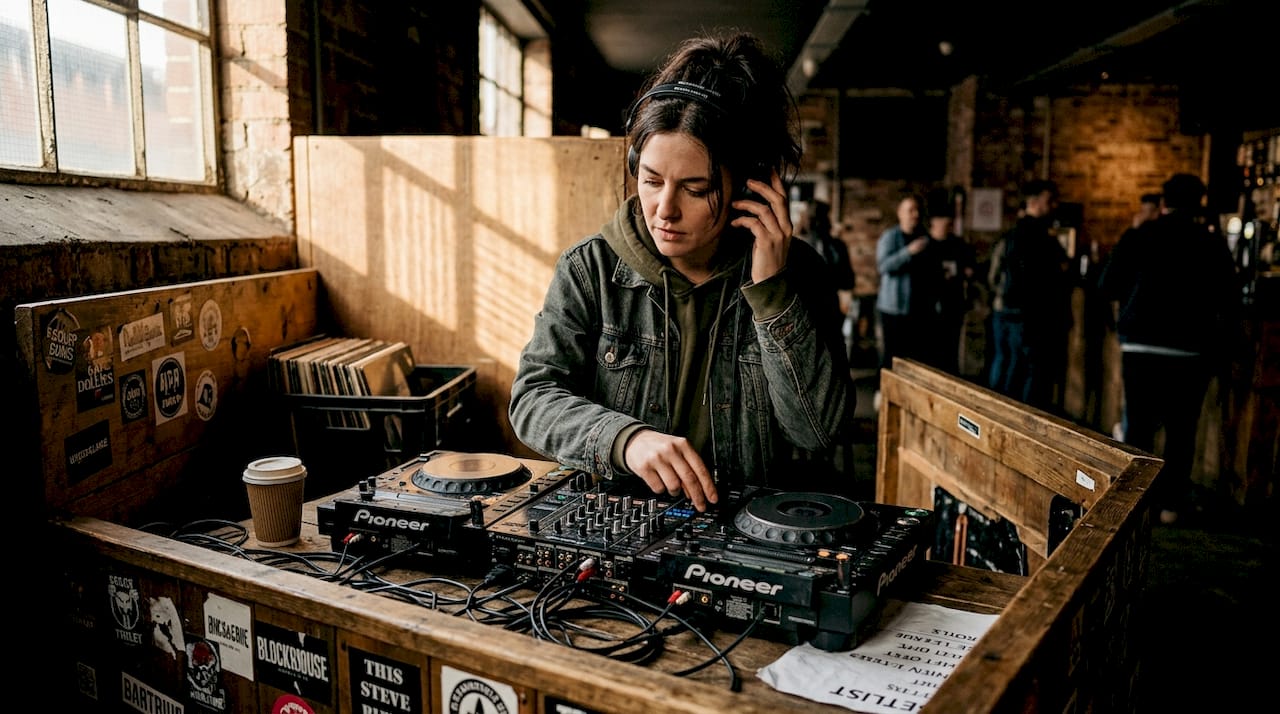
Sound quality starts with your files. High-resolution WAV or AIFF files preserve the low-end information that makes bass music hit properly. MP3s at low bitrates lose the sub frequencies that are the heartbeat of this genre. Aspiring SF bass DJs should prioritize building clean, well-organized libraries sourced from niche labels and local scenes.
Here's a solid gear checklist for underground bass DJing:
- Two CDJs or turntables
- A quality DJ mixer with EQ and filter controls
- Closed-back headphones with strong low-end response
- High-resolution audio files (WAV or AIFF preferred)
- Earplugs rated for music environments
- Backup USB drives or a secondary vinyl crate
- A reliable laptop with your library organized and ready
Earplugs deserve special mention. Underground venues in SF can hit dangerous volume levels, and protecting your hearing is a scene ethic, not just a personal choice. If you can't hear, you can't DJ for long.
Crate digging, the practice of hunting for fresh, rare, or locally relevant tracks, is a core part of bass DJ culture. It's how you stay connected to local underground influences and bring something unique to your sets rather than playing the same tracks everyone else is spinning.
"Read the dancefloor over the monitors." The monitors tell you what's technically happening. The crowd tells you what's actually working.
Pro Tip: Always prepare both a digital and vinyl backup, especially for SF venues. Power issues, software crashes, and equipment failures happen. The DJs who stay calm are the ones who came prepared.
DJ set vs. live set: Breaking down the difference
This question comes up constantly, especially for newcomers to the SF underground scene. A DJ set and a live set are fundamentally different experiences, even when they happen on the same stage.
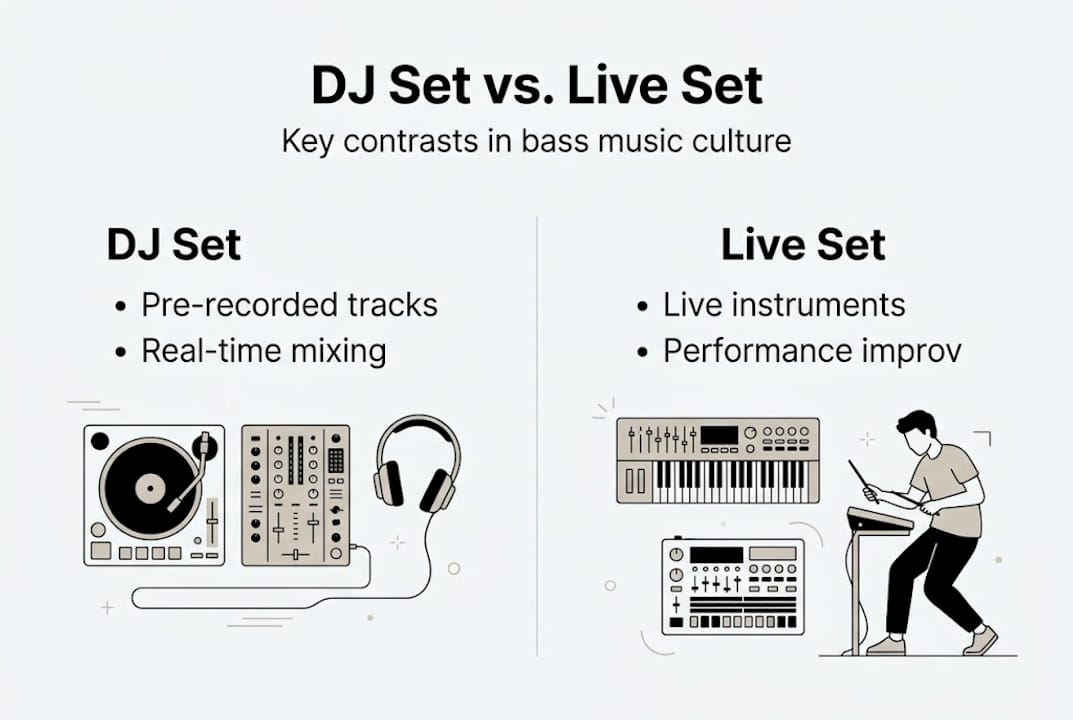
A DJ set uses pre-recorded tracks that the DJ selects, sequences, and blends in real time. The creativity lies in the curation, the transitions, the energy management, and the crowd connection. A live set, by contrast, involves performing and producing music live using hardware synthesizers, drum machines, samplers, or software. Sometimes artists combine both approaches in what's called a hybrid set.
SF's underground scene values authenticity through collectives that support both formats, but each serves a different purpose at an event.
| Criteria | DJ set | Live set |
|---|---|---|
| Music source | Pre-recorded tracks | Produced live |
| Flexibility | High curation control | High spontaneity |
| Audience interaction | Crowd-reading, energy flow | Real-time performance energy |
| Gear complexity | Moderate | High |
| Risk level | Lower | Higher |
Both formats are respected deeply in SF's bass underground. Neither is more legitimate than the other. What matters is the intention and the connection with the people in the room.
The cultural meaning of DJ sets in San Francisco's bass underground
A DJ set in SF's underground isn't just entertainment. It's a community ritual. The dancefloor becomes a shared space where people from different backgrounds connect through sound, movement, and mutual respect.
Here's how DJ sets actively support local culture in the bass underground:
- They amplify local artists and labels that commercial radio ignores.
- They create safe spaces where creative expression is prioritized over profit.
- They resist mainstream trends by championing niche sounds and underground aesthetics.
- They connect generations of music lovers, linking the history of rave culture to today's scene.
- They support local venues like Underground SF and F8, which are vital to the community's survival.
SF underground collectives like Program Audio and NO BIAS promote local bass-heavy sounds and actively resist corporate capture of the scene. This is not accidental. It reflects a shared set of values that have been built over decades.
"The underground isn't a genre. It's an ethics. It's about who gets to be in the room and why."
Community values like inclusivity, creative freedom, and a focus on the physical and sonic experience define what makes SF bass events feel different from a mainstream club night. The bass is heavier. The crowd is more engaged. The stakes feel real.
Frequently asked questions
How long does a typical DJ set last at SF bass events?
A typical set lasts from 1 to 6 hours, with energy arcs shaped around the crowd size, venue, and time slot in the lineup.
What's the main difference between a DJ set and a live set?
A DJ set mixes pre-recorded tracks in real time, while a live set features music that is created or manipulated live using hardware or software instruments.
What gear do I need for a bass music DJ set?
You'll need decks, a mixer, closed-back headphones, high-resolution audio files, and earplugs for underground venues to protect your hearing during long sets.
How do underground SF DJ sets differ from mainstream club sets?
Underground collectives like Program Audio and NO BIAS prioritize local bass-heavy sounds, community values, and creative freedom over the commercial music that dominates mainstream club nights.